

Record Scanner vs. CLZ Music vs. Discogs: Which Vinyl Tracker to Choose in 2026?
 Adrian
Managing a substantial library of LPs requires tools that respect your time. Whether your shelves hold a few hundred albums or you are pushing thousands, the goal is consistent: cataloging your music efficiently and keeping track of your asset's worth.
In 2026, three main applications dominate the vinyl tracker market: CLZ Music, Discogs, and Record Scanner. Each serves a specific purpose. This breakdown analyzes the functionality, costs, and use cases to help you decide which record manager fits your needs best.
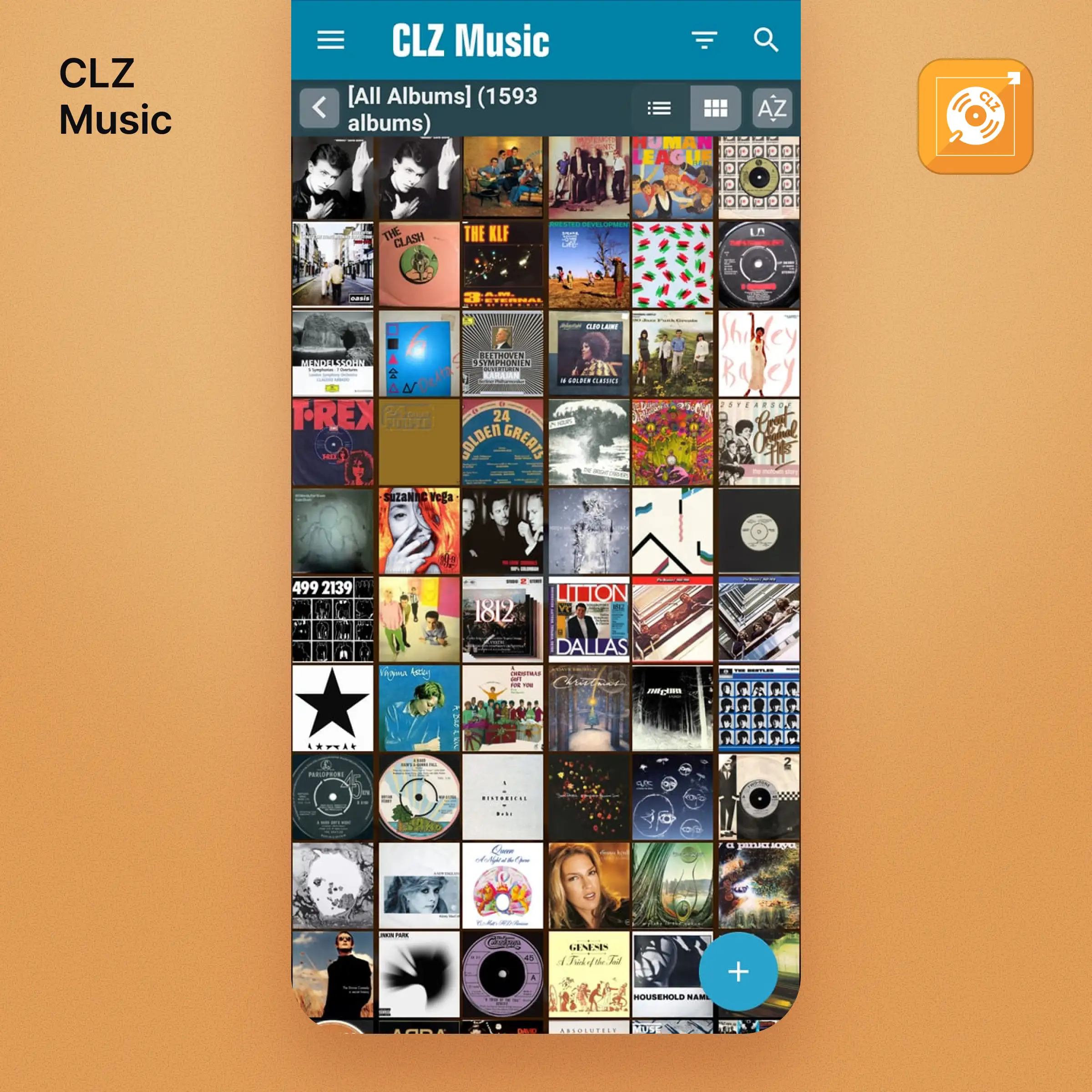 CLZ Music operates primarily as a sophisticated database tool rather than a casual app. It mirrors the depth of desktop software, allowing for incredibly detailed data entry, but this depth results in a complex interface that can feel dense and intimidating.
The design often resembles a spreadsheet rather than a modern mobile experience, making it best suited for power users who are comfortable navigating complicated data fields. Consequently, managing a vinyl collection here is powerful but requires a significant time investment to maintain. To add albums to your library, you rely on barcode scanning, as the system does not support album art recognition.
While it excels at organization, it lacks financial tools; specifically, it does not offer an automatic valuation feature, meaning users must research and enter the value of their records manually. The platform is available on mobile devices but also includes a desktop version for those who prefer managing their database on a larger screen (not included in a mobile plan).
CLZ Music operates primarily as a sophisticated database tool rather than a casual app. It mirrors the depth of desktop software, allowing for incredibly detailed data entry, but this depth results in a complex interface that can feel dense and intimidating.
The design often resembles a spreadsheet rather than a modern mobile experience, making it best suited for power users who are comfortable navigating complicated data fields. Consequently, managing a vinyl collection here is powerful but requires a significant time investment to maintain. To add albums to your library, you rely on barcode scanning, as the system does not support album art recognition.
While it excels at organization, it lacks financial tools; specifically, it does not offer an automatic valuation feature, meaning users must research and enter the value of their records manually. The platform is available on mobile devices but also includes a desktop version for those who prefer managing their database on a larger screen (not included in a mobile plan).
 Discogs is the largest music database and marketplace globally. Its mobile app focuses on buying, selling, and cataloging specifically within its own ecosystem.
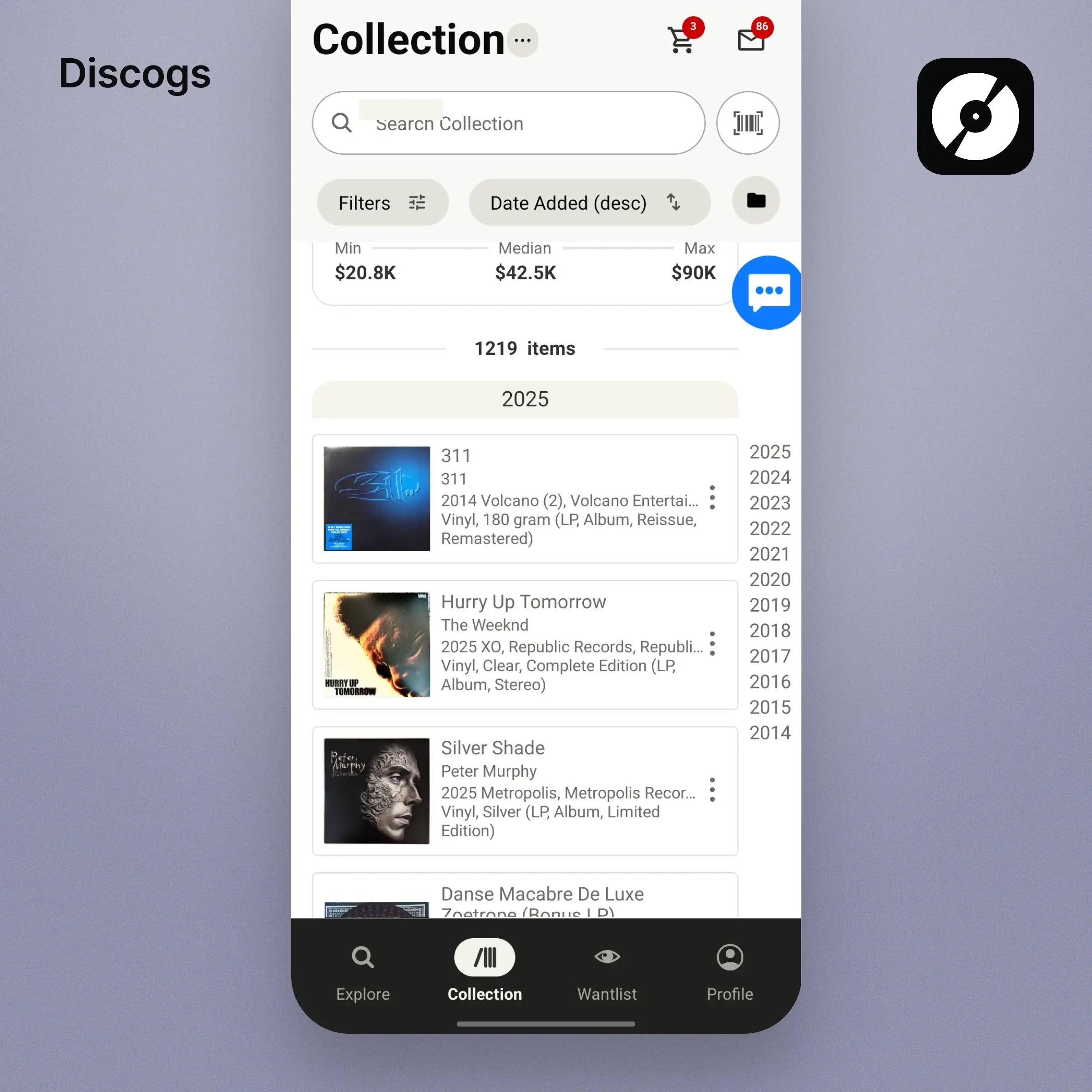
Similar to CLZ, it utilizes barcode scanning to locate items but does not feature visual album art recognition capabilities. Its most significant utility for collectors is the built-in vinyl price checker, which provides a vinyl value range - displaying Minimum, Median, and Maximum prices - derived directly from the sales history within its marketplace. However, the user experience can be inconsistent; users have reported technical issues such as login problems, random logouts, and bugs affecting the list sorting and search functions.
Discogs is the largest music database and marketplace globally. Its mobile app focuses on buying, selling, and cataloging specifically within its own ecosystem.
Similar to CLZ, it utilizes barcode scanning to locate items but does not feature visual album art recognition capabilities. Its most significant utility for collectors is the built-in vinyl price checker, which provides a vinyl value range - displaying Minimum, Median, and Maximum prices - derived directly from the sales history within its marketplace. However, the user experience can be inconsistent; users have reported technical issues such as login problems, random logouts, and bugs affecting the list sorting and search functions.
 Record Scanner offers an alternative approach focused on speed and ease of use. It is a mobile-first application built for fast cataloging.
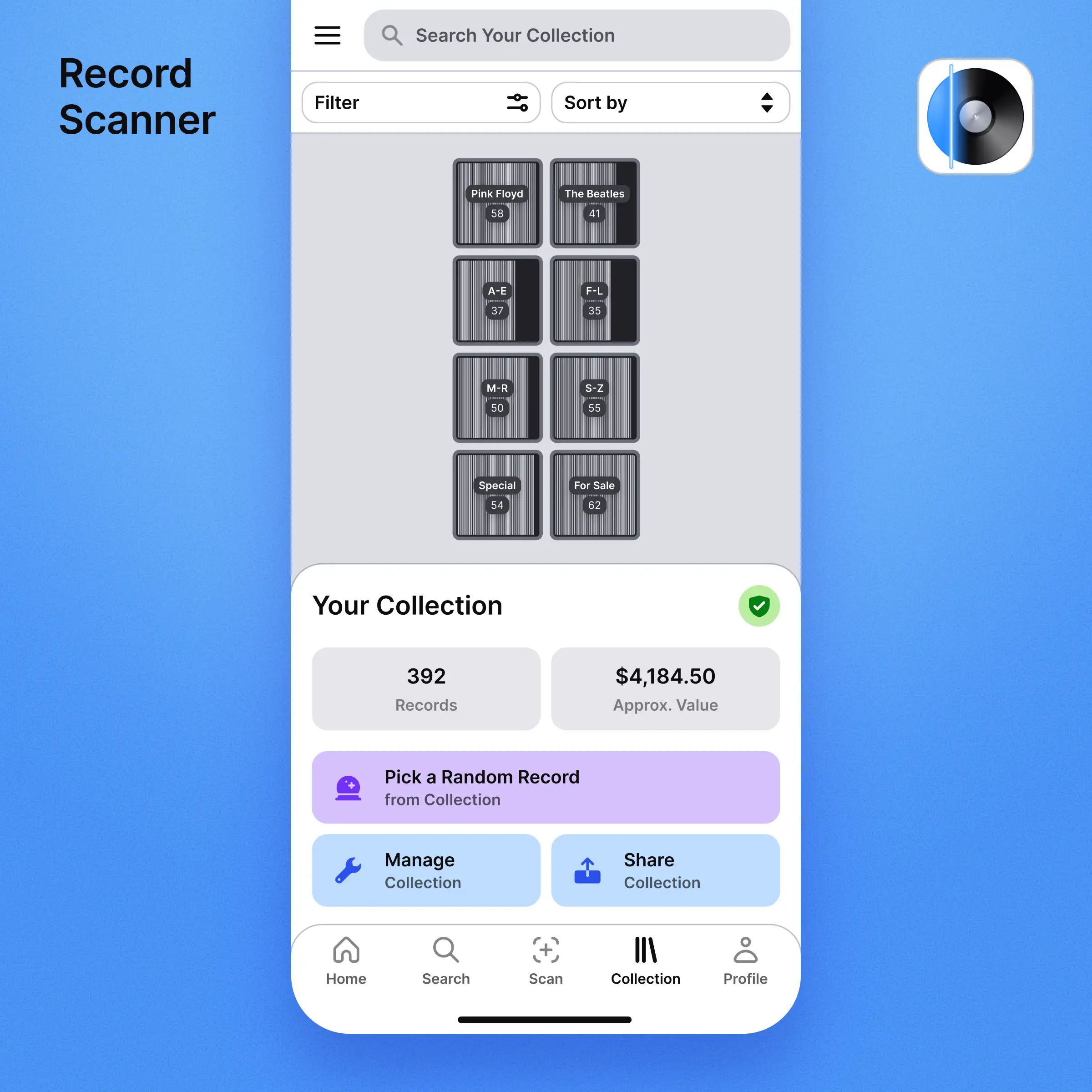
Record Scanner prioritizes a mobile-first interface designed for speed. Its primary method for adding items is cover scanning, which identifies vinyl, CDs, and cassettes by their artwork rather than requiring barcodes (though barcode and catalog number scanning is also supported). The app provides an estimated market value for the collection and includes integration with Discogs for selling records. Unlike detailed database software, it focuses on a quick and easy user experience, while still offering advanced organization tools like tagging and virtual shelves (see our article explaining the Records Cabinet functionality).
Record Scanner offers an alternative approach focused on speed and ease of use. It is a mobile-first application built for fast cataloging.
Record Scanner prioritizes a mobile-first interface designed for speed. Its primary method for adding items is cover scanning, which identifies vinyl, CDs, and cassettes by their artwork rather than requiring barcodes (though barcode and catalog number scanning is also supported). The app provides an estimated market value for the collection and includes integration with Discogs for selling records. Unlike detailed database software, it focuses on a quick and easy user experience, while still offering advanced organization tools like tagging and virtual shelves (see our article explaining the Records Cabinet functionality).
CLZ Music
Cost
CLZ Music uses a subscription model priced at $1.99 per month, with a 7-day trial.Use Case
CLZ Music suits users who require granular control over their data. If you need to catalog very specific details about your cd and vinyl collection manually and do not require automated market valuations, this tool provides the necessary depth.Discogs
Cost
The Discogs app is fully free.Use Case
Discogs is the standard for checking specific pressing data and current market prices. It is the primary tool for users whose main objective is buying and selling on the secondary market.Record Scanner
Cost
Record Scanner offers a Free plan (with a collection limit) and an Unlimited plan with different pricings depending on the region.Use Case
Record Scanner is optimized for collectors who want to digitize their library quickly. It is suitable for those who want an immediate overview of their collection's value and prefer a modern, interruption-free interface without manual data entry.Comparison: Functionality and Workflow
Choosing a Discogs alternative or a primary manager depends on three factors: input method, valuation needs, and user experience.1. Adding Records
- CLZ & Discogs: Both rely on barcode scanning. For vintage records without barcodes, users must search manually or type catalog numbers.
- Record Scanner: Uses visual recognition. You point the camera at the cover to identify the album.
2. Collection Valuation
- CLZ: Requires manual input of prices.
- Discogs: Provides a range (Min/Median/Max) based on past marketplace sales.
- Record Scanner: Provides an estimated market value.
3. Data Export and Ecosystem
- Export: All three apps allow users to export their collection data.
- Web Access: CLZ and Discogs offer desktop versions. Record Scanner focuses on a mobile experience but allows for data export.
- Social Features: Discogs has built-in forums and user lists. Record Scanner allows for external collection sharing.
Summary
The choice of a vinyl manager depends on your specific goals. If you require a complex database with custom fields and prefer entering data manually, CLZ Music provides a traditional library system structure. If your main activity involves flipping records and tracking detailed sales history, Discogs provides the necessary marketplace data, despite potential technical friction. If you value efficiency and stability, Record Scanner offers a distinct advantage. Its specific cover scanning technology makes it a fast method to catalog a large record collection, while instant valuation features provide immediate insight into your investment. You can try Record Scanner for free to see how the cover scanning works with your library:You May Be Interested In
© 2026 Record Scanner